Merge Blast
Gimica GmbHCasual
4.33.35K Reviews
- Version
- 1.5.1
- Installs
- 5.00M
- Age Rating
- Everyone
Screenshots
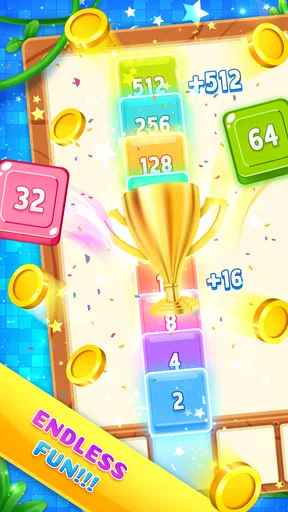
Our Review of Merge Blast
 Analysis by Appyee
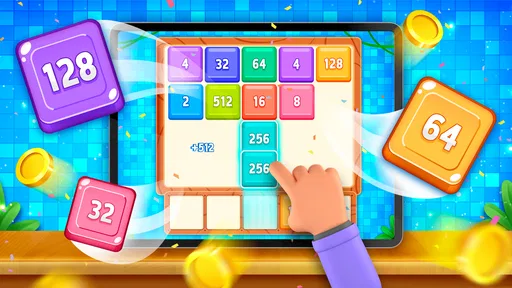
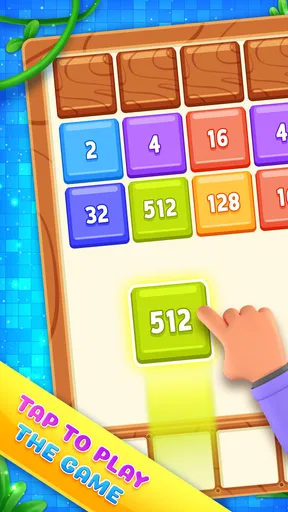
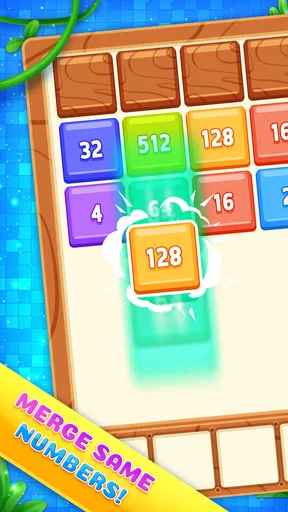
I found Merge Blast easy to understand within moments, but not quite as effortless to master. It is a casual puzzle game from Gimica GmbH built around placing blocks on a board and combining matching pieces. That simple idea makes it a natural choice for a short break, especially when I want something more active than a passive time-killer but less demanding than a full strategy game.
My first impression was that the game’s appeal comes from the small decisions rather than from a complicated rulebook. Every placement changes the space available for the next move, so even a quick session gives me something to think about. It is free to download, rated for Everyone, and has reached over 5 million installs, which makes it an easy game to suggest to family members or friends who want a straightforward mobile puzzle.
What playing Merge Blast feels like in everyday use
The core loop is deliberately compact: blocks arrive, I place them on the board, and I look for useful combinations. The satisfaction comes from turning several modest moves into a larger clear. It is the kind of design that works well when I have only a few minutes, because I can start playing without first learning a long list of characters, menus, or objectives.
That simplicity also creates the main challenge. A move that looks helpful immediately can leave an awkward gap or consume the only useful space for a later combination. I quickly learned to stop treating every possible merge as automatically good. Sometimes keeping a block in place is more valuable than clearing it at once, particularly when the board still offers room to build a better chain.
For a realistic everyday example, I can imagine opening it while waiting for a coffee or sitting on public transport. I do not need headphones, a long uninterrupted session, or a detailed story to follow. I can play a little, put the phone away, and return later without feeling that I have lost the thread of a campaign. That makes it more convenient than many casual games that depend on constant events or lengthy rounds.
The trade-off is that players looking for a deep progression system, a strong narrative, or competitive multiplayer may find the experience too focused. Merge Blast is at its best as a board puzzle, not as an all-purpose entertainment package. I would recommend it to someone who enjoys arranging pieces and planning ahead, but I would not present it as a substitute for a larger strategy title.
Where new players usually get stuck
The first common mistake is playing only for the immediate blast. Clearing a group feels rewarding, but the best move is not always the one that creates the biggest visible action. I get better results by checking what the board will look like after the move, then asking whether the remaining spaces can still support a useful placement.
A second source of friction is filling the board too evenly. A neat-looking arrangement is not necessarily a flexible one. I prefer to protect a few open areas and avoid creating isolated pockets that cannot accept the blocks I need. This is a small habit, but it changes the game from reactive tapping into more deliberate planning.
I also recommend taking a brief pause before placing a piece when several options appear possible. Casual games encourage fast decisions, yet Merge Blast rewards a slower glance. Looking across the whole board rather than at the most obvious match helps reveal combinations that are not immediately adjacent to the block I am holding.
Players who expect every move to produce an instant reward may find that restraint feels counterintuitive. The game becomes more enjoyable once I accept that a quiet setup move can be more important than a dramatic clear. That is one of the less obvious lessons here: the board is not just a place to remove blocks; it is a limited resource that I need to preserve.
Setup checks before blaming the game
Getting started should be uncomplicated because the game is free and supports devices running Android 7.0 or later. Before installing, I would check the phone’s operating system and available storage, particularly on an older device that already has little room. A failed or incomplete installation can look like a game problem when it is really a device-side issue.
If the game does not open correctly after installation, my first practical step would be to close other demanding apps and restart the phone. I would then try launching it again before changing anything more complicated. On an older handset, background activity, low free storage, or a pending system update can create slow starts and crashes that are not caused by the puzzle itself.
It is also worth checking that the installation finished normally rather than relying on an interrupted download. If an update seems stuck, I would use the device’s standard app-store process to retry it, then confirm that the current version shown on the device is 1.5.1. I would avoid downloading unofficial copies, since they can introduce problems that have nothing to do with Gimica GmbH’s game.
The age rating is Everyone, so I see it as broadly suitable for a shared family device. Even so, a parent should still review the purchase settings on the phone if children will play. The game includes optional in-app purchases ranging from $0.99 to $7.49 per item, and a free download can still lead to spending if purchase controls are not configured.
That is one of the most useful setup checks because it separates access from spending. I can play without paying, but I would not hand the phone to a child without first checking the device’s purchase safeguards. This is not a criticism of the board mechanics; it is simply sensible housekeeping for any free mobile game that offers optional items.
Recovering a session when progress or play feels awkward
When I make a poor move, I try not to respond by placing pieces rapidly in the hope of repairing the board. Fast corrections usually make the position worse. Instead, I scan for the least damaging placement and focus on reopening useful space. The recovery mindset matters because a crowded board can still be playable if I stop chasing the move I wish I had made.
A helpful workflow is to divide the board mentally into three areas: the space I am actively building, the space I am protecting for future pieces, and the area that can absorb an inconvenient block. I do not need a formal system to use this approach. It simply prevents me from filling every available square and gives me somewhere to place a piece that does not fit the current plan.
If the game appears frozen during play, I would first wait briefly rather than tapping repeatedly. Repeated taps can make it difficult to tell whether the input was delayed or ignored. If nothing changes, I would close and reopen the game, then check whether the phone itself is responding normally. A restart is often a cleaner recovery than repeatedly pressing the same control.
When a session ends unexpectedly, I would also consider whether the phone was low on memory or battery, whether another app interrupted it, or whether the device had recently changed connection or system state. These checks are more useful than immediately assuming the board game has lost everything. If the problem happens repeatedly, recording exactly when it occurs—during launch, placement, or a transition—would make any later support request clearer.
I would be cautious about clearing app data as a first response. That kind of reset can remove local information, so it is better reserved for situations where ordinary closing, restarting, and reinstalling through the normal store channel have not helped. The practical rule is simple: try reversible steps first and avoid destructive troubleshooting until there is a clear reason.
When the app is not really the cause
Some complaints that sound like gameplay problems are actually caused by the phone environment. If blocks seem slow to respond, I would compare the game’s behavior with another app. If the whole device is lagging, the likely issue is broader than Merge Blast. Freeing storage, closing unnecessary background apps, and restarting the handset are sensible first actions.
Touchscreen problems can also be misleading. A poorly fitting screen protector, damp fingers, or a damaged area of the display may make a placement appear inaccurate. I would test the same part of the screen in another app before deciding that the game is misreading input. This is particularly important in a board game, where one misplaced block can change the entire position.
Notifications, calls, battery-saving modes, and automatic updates can interrupt a short session. If the game behaves differently after an interruption, I would first return to a stable device state and try again. The goal is to distinguish a repeatable game issue from a one-off interruption caused by the operating system.
Network conditions can be another source of confusion for any mobile title, even when the central activity feels self-contained. If a screen takes longer than expected to load, I would check whether other apps can connect normally and switch between available connections when appropriate. I would not keep tapping while a screen is waiting, because delayed responses can turn one intended action into several.
These checks do not make the game more exciting, but they save time. I prefer them to immediately uninstalling a title I otherwise enjoy, especially when the problem appears only once or disappears after a restart. Good troubleshooting is mostly about identifying patterns rather than guessing.
Small habits that make the board more manageable
My most useful habit is to value future flexibility over visual neatness. I try to avoid building a wall that divides the board into unusable sections. Open lanes give me more options when the next block is inconvenient, while a crowded corner can force several bad placements in a row.
I also look for delayed combinations. A block that does not help immediately may become valuable after one or two placements. This is where the game differs from a purely reflex-based casual title: the strongest move can be the one that prepares the board rather than the one that produces the largest current effect.
Another practical tip is to change the way I review a position after a mistake. Instead of asking only, “How do I clear this?”, I ask, “Which part of the board can still be made useful?” That question narrows the choices and prevents me from wasting moves trying to restore an earlier arrangement that is no longer possible.
I would also avoid spending simply because a difficult board creates pressure. Optional purchases may be convenient for some players, but the basic appeal of Merge Blast is the decision-making itself. If I feel that progress depends on buying something, I would step away and return later rather than turning a short puzzle break into an unwanted expense.
How it compares with other casual puzzle choices
Compared with match-three games, Merge Blast feels less dependent on scanning for a colorful combination and more focused on spatial planning. Match-three alternatives often reward quick pattern recognition and cascades, while this game asks me to think about the shape of the remaining board. Someone who enjoys arranging limited space may prefer it; someone who wants constant visual fireworks may find a traditional match-three game more immediately satisfying.
It also differs from endless runners and reaction games because speed is not the main attraction. I can take a more measured approach and consider the consequences of a placement. That makes it better suited to quiet breaks than to players who want rapid movement, reflex tests, or a strong sense of physical action.
Against larger puzzle games with elaborate worlds, Merge Blast is intentionally narrower. There is less narrative motivation to keep me playing, but there is also less overhead. I do not have to remember a complicated cast, manage a broad inventory, or learn several unrelated systems before enjoying a session. The right choice depends on whether I want a focused board challenge or a richer long-term package.
The free entry point is another advantage for casual use, although the optional purchase range means I would still configure spending controls. Its 4.3 average from around 60 thousand ratings suggests a generally positive reception, and the roughly 3.4 thousand written reviews provide evidence that it has attracted active player feedback. I treat those figures as context rather than a guarantee, because my own experience depends on whether I enjoy this style of board management.
Who should play it, and who should skip it
I think Merge Blast is a good fit for players who want a compact puzzle with simple rules and room for planning. It works especially well for people who enjoy improving their decisions from one attempt to the next, rather than relying on a large collection of characters or a constant stream of new content. Its Everyone rating also makes it a reasonable option for a shared household device.
I would be more cautious recommending it to someone who dislikes board congestion or becomes frustrated when a good-looking move creates a worse position later. The game’s tension comes from limited space, so that pressure is not an occasional side effect; it is central to the experience. Players who need a clear story, social competition, or fast action should look elsewhere in the casual category.
I would also skip it if my main reason for downloading a game were a guaranteed offline routine, a deep progression system, or a completely purchase-free environment. Those expectations do not match what I found here. It is better understood as a focused free puzzle with optional spending, not as a major long-term game platform.
My practical verdict after using it
Merge Blast succeeds because it keeps its central idea readable while leaving enough room for mistakes, recovery, and better planning. I like that a short session can still feel meaningful, and I appreciate that the game rewards patience instead of demanding constant speed. The strongest part is the quiet decision-making: protecting space, delaying a tempting merge, and finding a useful placement after the board becomes crowded.
Its limitations are equally clear. The narrow format may lose its appeal for anyone seeking variety, story, or competition, and free-to-play purchase options mean I would set spending boundaries before sharing the device. Technical problems should also be checked against the phone, touchscreen, storage, and interruptions before being blamed on the game.
Gimica GmbH has made a casual title that is easy to start but offers more thought than its short description suggests. I would recommend it to a friend who likes tidy-looking boards, careful choices, and games that fit naturally into spare minutes. If you enjoy planning around limited space more than chasing constant action, this is a worthwhile free download. For everyone else, especially players wanting a story-driven or highly social experience, another type of casual game will probably be the better match.
Verdict
Strengths of Merge Blast
- Simple merge mechanics are easy to learn and play casually.
- Short levels make it convenient for quick gaming sessions.
- Colorful visuals give the game a cheerful, accessible presentation.
- Progression provides regular goals beyond the basic merging gameplay.
- Offline play is useful when you have limited or no internet access.
Limitations of Merge Blast
- Repeated merging can feel monotonous after extended play.
- Difficulty may increase abruptly in some later stages.
- Frequent ads can interrupt the flow between levels.
- Limited strategic depth may disappoint experienced puzzle players.
- Some upgrades or bonuses may encourage optional in-app purchases.
Other Releases by Gimica GmbH
View All


Similar Picks in This Category
View All
My Talking Angela
Outfit7 Limited4.2

My Talking Tom
Outfit7 Limited4.3

Pou
Zakeh4.2

My Talking Tom 2: Pet Game
Outfit7 Limited4.3

Candy Crush Saga
King4.6

Bridge Race
Supersonic Studios LTD4.1
Frequently Asked Questions
What is Merge Blast, and how does the gameplay work?
Merge Blast is a casual puzzle game built around combining matching objects to create higher-level items and clear obstacles from the board. During testing, its gameplay felt easy to understand: you drag or tap pieces, merge identical elements, and use the resulting combinations to complete objectives. As levels progress, the board becomes more challenging, requiring planning rather than simply making the fastest available move.
Is Merge Blast free to download and play?
Merge Blast can generally be downloaded and played without an upfront purchase, making it accessible to casual players who want a quick puzzle experience. However, free gameplay may include advertisements, optional in-app purchases, or other limitations depending on the version and platform. Before downloading, check the store listing for current pricing, available purchases, and whether the game offers a paid option to remove advertising.
Does Merge Blast require an internet connection?
The basic puzzle mechanics in Merge Blast may work without a continuous internet connection, which is useful when playing during travel or in areas with limited coverage. Nevertheless, some features can depend on online access, including advertisements, cloud saving, events, rewards, updates, or purchases. If offline play is important to you, test the game after disabling your connection and confirm which progress and features remain available.
Are there advertisements or in-app purchases in Merge Blast?
Players should expect that Merge Blast may use advertisements and optional in-app purchases as part of its free-to-play model. Ads can appear between levels or when claiming bonus rewards, while purchases may provide extra moves, boosters, currency, or other conveniences. These options are not necessarily required to complete the game, but they can influence the pace of progression, so parental purchase controls are recommended on shared devices.
Is Merge Blast suitable for children and does it save progress?
Merge Blast is generally approachable for children because the controls are simple and the core gameplay does not require advanced gaming skills. However, parents should review the game’s age rating, advertising content, privacy information, and purchase settings before allowing younger players to use it. Progress-saving behavior can vary by version; linking the game to an account or using the platform’s backup system may help protect progress after changing devices.
Play our best games!


